Surety Bonds for Trail Construction Projects: How Conservation United Removes Barriers for Nonprofits, Small Crews, and Public-Land Builds
Trail projects sit at the intersection of public access, ecological sensitivity, and tight funding. Whether you are building a multi-use path under the Recreational Trails Program, restoring a wilderness route on USFS or BLM land, or connecting urban greenways, owners (municipalities, land trusts, state parks, federal agencies) almost always require financial guarantees that the work will finish on time, to specification, and with all suppliers and subcontractors paid.
Letters of credit lock up working capital. Self-insurance is rarely realistic for mission-driven organizations. Traditional surety bonds often demand personal indemnity from an executive director or officer—an unacceptable risk for many nonprofits and small trail contractors. Conservation United specializes in solving exactly that problem.
Why Trail Projects Face Distinct Bonding Challenges
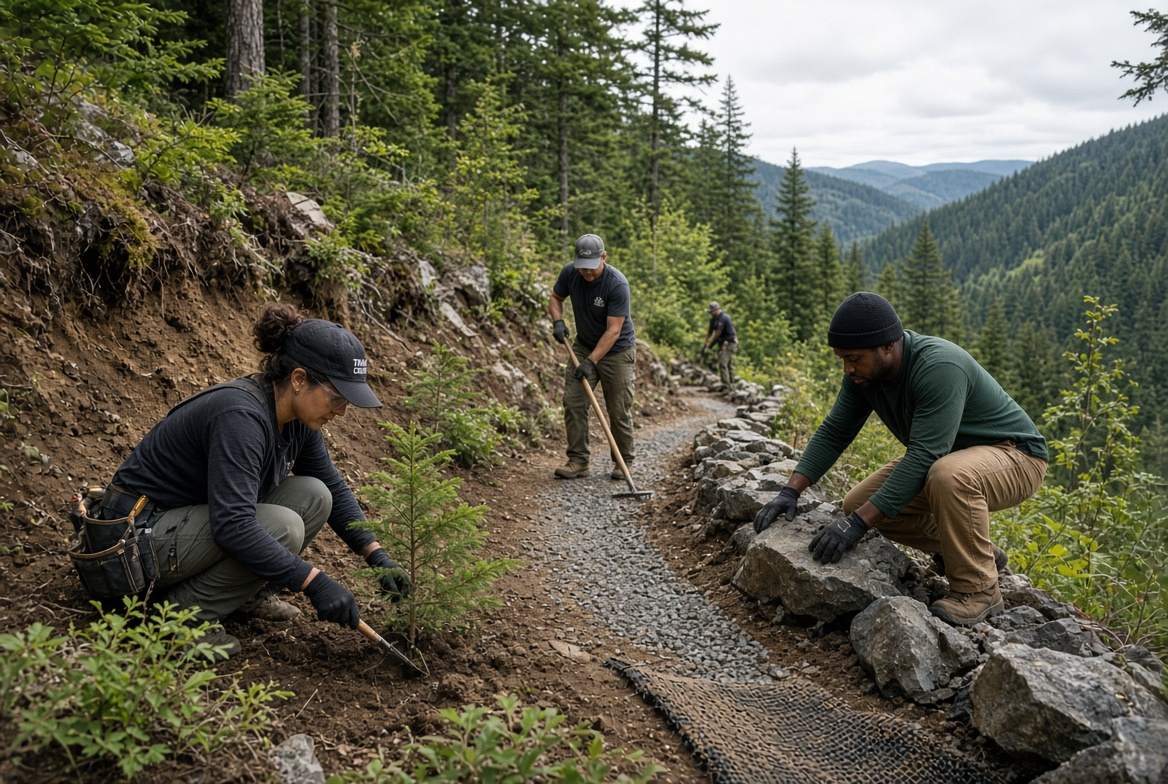
Trail construction differs from conventional building in several high-impact ways:
-
Work occurs in sensitive habitats with seasonal wildlife restrictions, cultural-resource monitoring, and strict erosion-control and revegetation requirements (NEPA, Section 106, agency-specific stipulations).
-
Access is often remote; weather, terrain, and material logistics create schedule risk.
-
Funding is frequently a mix of federal/state grants, local match, and donations—each with its own compliance and audit expectations.
-
Labor mixes paid crews, specialized subcontractors (native-seed suppliers, boardwalk fabricators, heavy equipment operators), and sometimes volunteers.
-
Long-term performance matters: trail tread, drainage, and plantings must hold up under foot traffic, freeze-thaw cycles, and extreme weather for years after ribbon-cutting.
A default or major non-compliance can trigger stop-work orders, grant clawbacks, habitat damage, and loss of public trust. Surety bonds address these risks through a three-party structure: the contractor (principal), the project owner or agency (obligee), and the surety (Conservation United and its markets). If the principal fails to perform, the surety steps in to complete the work or compensate the obligee—then seeks recovery from the principal. This is not traditional insurance; it is a performance guarantee.
Core Bond Types Conservation United Provides for Trail Work
Bid Bonds
Required on most competitive public solicitations. They guarantee that the low bidder will enter the contract at the bid price and furnish the required performance and payment bonds. Typical amount is 5–10 % of the bid. A bid bond signals financial capacity without tying up cash the way a certified check or letter of credit would.
Performance Bonds
Usually 100 % of contract value. They guarantee the trail will be built to the approved plans, specifications, schedule, and environmental conditions (erosion control, wildlife corridors, accessible design, habitat restoration). If unexpected rock, archaeological finds, or weather delays occur and the contractor cannot finish, the surety ensures completion.
Payment Bonds
Protect subcontractors, laborers, and suppliers of sustainable materials (recycled aggregates, native plants, permeable surfaces, signage). They prevent liens that can stall progress and damage relationships in the tight-knit trail-building community. Often required alongside performance bonds on public projects (Miller Act or state little Miller Act equivalents).
Maintenance / Warranty Bonds
Extend coverage 1–5 years after substantial completion for workmanship, settling, drainage failure, or revegetation success. Especially valuable on high-use public trails and projects in freeze-thaw or high-erosion environments.
Conservation United can incorporate conservation-specific riders addressing low-impact construction methods, habitat-protection clauses, and federal compliance language. These are not generic construction bonds; they are underwritten with an understanding of trail and restoration realities.
The Conservation United Difference: No Personal Indemnity and Conservation Expertise
Many surety markets still require an officer or executive director to sign a personal indemnity agreement. That puts homes, savings, and personal assets at risk—an especially high barrier for nonprofit trail alliances, land trusts, and small mission-driven contractors.
Conservation United has developed underwriting approaches that evaluate the organization or company on its operational capacity, project history, financial health, and experience rather than demanding personal guarantees from leadership. This single feature opens the door for many organizations that previously could not bid or would have declined work because of personal exposure.
Additional practical advantages:
-
Access to 20+ surety markets, increasing the chance of competitive terms even for smaller or specialized firms.
-
Nationwide capability (licensed in all 50 states) with experience across desert, forested, alpine, and coastal environments.
-
Streamlined processes: qualified applicants frequently receive approvals in as little as 48 hours with focused documentation.
-
Underwriters who understand trail-specific risks—seasonal windows, NEPA pathways, remote logistics, and the realities of working with grant-funded or volunteer-supported projects.
Realistic Cost Expectations
Premiums are a percentage of the bond amount and typically range from roughly 0.75 % to 3 % depending on the applicant’s financial strength, experience in trail or similar work, project size and complexity, and the surety’s assessment.
Illustrative examples (actual rates vary):
-
$250,000 performance + payment package at 2.0 % → approximately $5,000 premium.
-
$500,000 package at 1.75 % → approximately $8,750.
-
Smaller bid bonds are correspondingly lower.
Because the premium is a fraction of the protected contract value and does not freeze working capital the way a letter of credit does, most organizations find the net financial impact manageable—especially when the bond unlocks larger or grant-funded work.
How Bonds Unlock Funding and Credibility
Public owners and grant programs (Recreational Trails Program and many state equivalents, Land and Water Conservation Fund projects, municipal RFPs, federal agency contracts) routinely require or strongly prefer bonded contractors. A bonded bid package:
-
Satisfies procurement rules and protects taxpayer or donor dollars.
-
Improves pre-qualification scores.
-
Demonstrates organizational seriousness to foundations and public-private partners.
-
Reduces the risk of project abandonment that could leave sensitive sites in a degraded state.
For nonprofits and smaller firms, the ability to post bonds without personal indemnity can be the difference between remaining limited to small private jobs and competing for multi-year, multi-mile public trail systems.
Practical Steps to Secure a Bond with Conservation United
-
Gather core information: recent financial statements or management accounts, experience list of comparable trail or restoration projects, organizational structure, and details of the specific project (scope, location, owner, contract value, environmental requirements).
-
Contact Conservation United early—ideally before the bid deadline—so underwriting can be completed in parallel with proposal preparation.
-
Complete a focused application; the team evaluates capacity rather than relying solely on personal guarantees.
-
Receive terms, execute the bond documents, and present the bond to the project owner.
Many applicants who have been declined elsewhere succeed here because of the specialized underwriting and market access.
Strengthening Your Bondability Over Time
-
Maintain clean, current financial records and working-capital ratios appropriate to the size of projects you pursue.
-
Document successful completion of prior trail, restoration, or environmental construction work.
-
Build relationships with reliable specialty subcontractors and suppliers who themselves understand conservation standards.
-
Consider pairing surety capacity with complementary coverages (general liability, pollution liability, workers’ compensation tailored to conservation work) so the overall risk profile is coherent.


