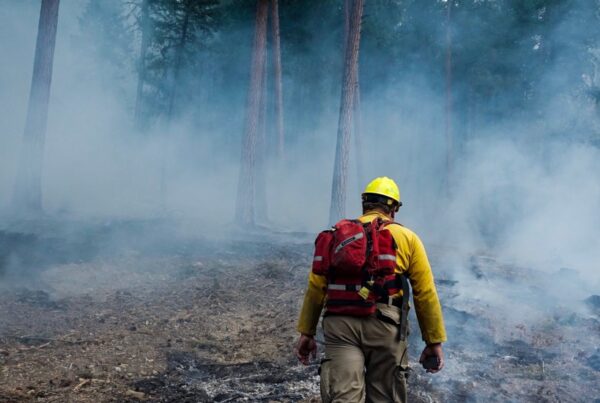
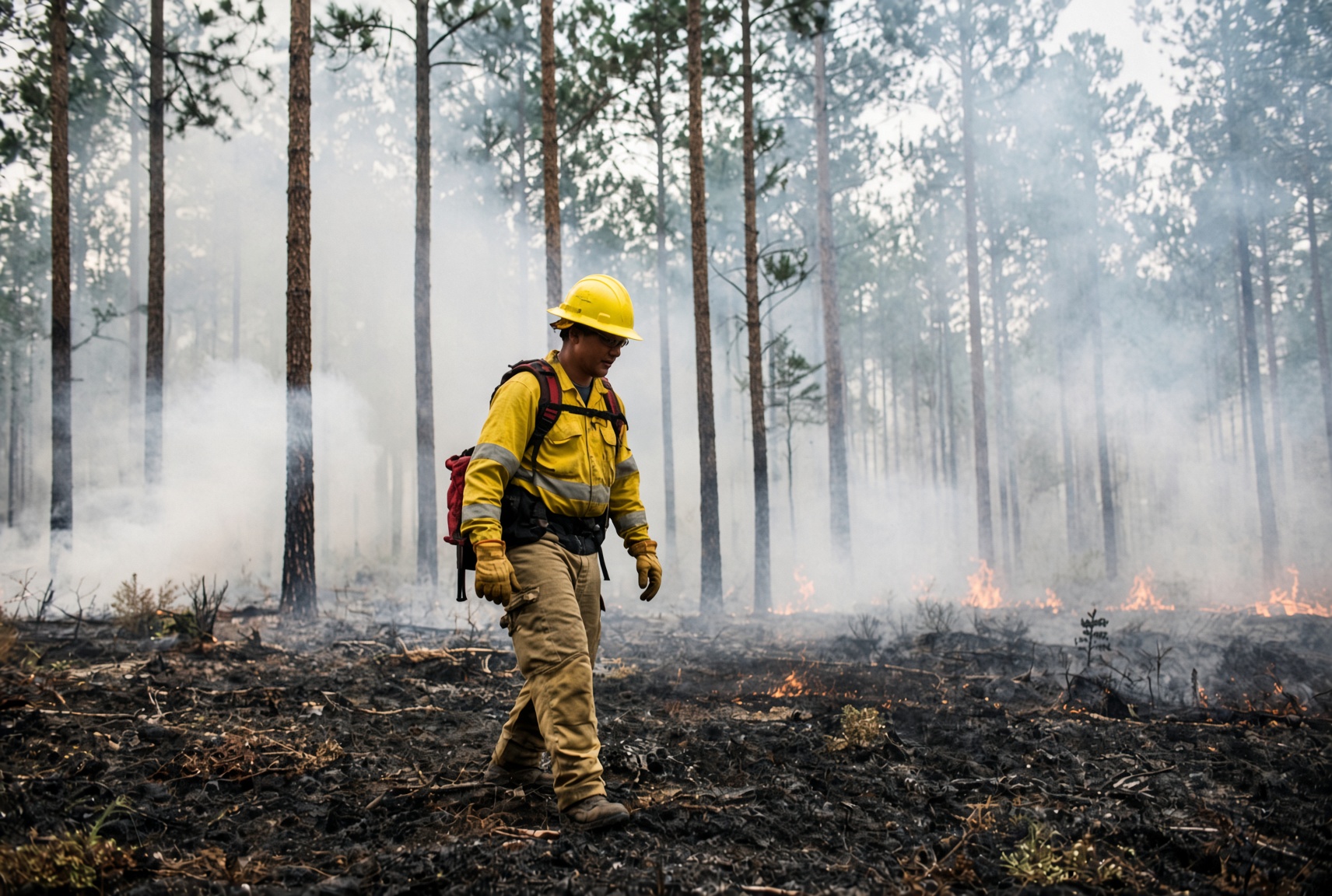
Prescribed fire remains one of the most cost-effective tools for reducing wildfire risk, restoring habitat, and managing fuels across the United States. National Interagency Fire Center data show millions of prescribed-fire acres treated annually alongside large wildfire years—in 2024 alone, wildfires burned nearly 9 million acres, while prescribed-fire activity continues to scale in the South, West, and beyond. Yet the very activity that protects landscapes creates specialized liability exposures that standard commercial general liability (GL), farm, or ranch policies routinely exclude or limit.
Conservation United, a brokerage focused exclusively on conservation and environmental risks since 2015, built a nationwide prescribed-fire liability program specifically for this gap. It is not a generic environmental endorsement forced onto a standard form. It is underwritten around planned ignitions conducted under a written prescription.
Why Standard Policies Fail on Prescribed Fire
Three structural problems keep most carriers out of this class:
-
Hostile-fire exclusions. Many GL and farm policies treat fire that leaves its intended bounds (spot-overs or escapes) as “hostile.” A well-planned burn that spots across a line can be reclassified after the fact, leading to a coverage denial rather than a claim payment.
-
Smoke and ash treated as pollution. Neighbors, vineyards, highways, livestock operations, and sensitive receptors generate third-party claims for smoke, ash, and odor. Basic GL forms often exclude these without dedicated pollution liability.
-
Professional risk is separate. The burn boss, prescription author, or supervising consultant carries errors-and-omissions exposure that a landowner-only premises policy does not automatically cover.
Conservation United’s program is written around those three gaps: general liability for the operation (including escape/spot-over claims and defense costs), professional liability for planning and supervision, and pollution liability for smoke and related third-party environmental claims. Umbrella or excess limits can be stacked up to $10 million when timber access agreements, agency contracts, or large landowners require it.
What the Policy Actually Covers (and What It Does Not)
In practical terms the core coverage typically includes:
-
Third-party bodily injury and property damage arising from a planned ignition under prescription.
-
Legal defense costs (often larger than the underlying property damage).
-
Escape and spot-over claims when fire leaves the unit.
-
Smoke, ash, and related pollution-style third-party claims.
-
In many placements, fire-suppression cost reimbursement.
-
Optional workers’ compensation, commercial auto, tools-and-equipment (drip torches, pumps, UAS, ATVs), and surety bonds when contracts demand them.
The policy is not a substitute for a written burn plan, an experienced or certified burn boss, smoke-management compliance, or the landowner’s underlying property coverage. Underwriters still evaluate the quality of the operation: control lines, weather triggers, holding resources, training, and adjoining values all affect pricing and acceptability. A unit with documented planning and trained crews prices differently from an undocumented one.
Related activities that can often be contemplated on the same form include firebreak construction and maintenance, vegetation management, habitat restoration, training, monitoring, invasive-species work, and certain research or consulting services.
Who Needs This Coverage—and Real-World Scenarios
The program is available to individuals, for-profit and nonprofit organizations, land trusts, municipalities, universities, contractors, and prescribed-fire councils nationwide.
-
Private landowner or timber manager. You hold the ground and may be named on a contractor’s certificate. Your farm or ranch policy may contain a hostile-fire or pollution gap. A dedicated policy (or higher limits) protects you when a neighbor’s claim or suppression invoice arrives.
-
Burn boss or contractor. You write the prescription and supervise the ignition. Professional liability protects against allegations of negligence in planning or execution that a premises policy does not cover. Multi-state operators benefit from a single nationwide form rather than patchwork state markets.
-
Prescribed-fire council or association. Master or group policies can cover member organizations and training events under one structure, often at better rates than individual placements and with simplified certificate issuance. Conservation United has worked with councils (including pooled approaches) to remove the “each crew finds its own market” barrier.
-
University, land trust, or agency partner. Research burns, cooperative agreements, or cost-share projects (NRCS EQIP/CSP, carbon or habitat programs) frequently require specific limits, additional-insured wording, and pollution coverage. Lenders financing brush management or pasture renovation increasingly request proof of prescribed-fire liability in the project file.
State claims funds and association risk pools (examples include California’s pilot fund and emerging programs in other states) can serve as useful backstops for eligible participants. They are not identical to a private commercial policy that can be placed on a Weyerhaeuser-style access agreement, an NRCS file, a multi-state contractor schedule, or a university research burn that needs immediate certificates.
Pricing, Underwriting, and Service Reality
Annual policies for active practitioners often start in the neighborhood of $5,000; master structures for councils typically price more efficiently. Actual premium depends on acreage, burn frequency or days, state and local conditions, limits requested, experience and training of the burn boss, prior loss history (including smoke complaints), and the quality of planning and holding resources. Treat published starting points as indicators, not quotes.
Underwriting focuses on concrete operational details: named insureds, states and counties, estimated acres and burn days, prescription and burn-boss qualifications, control lines and adjoining values, smoke-management plan and sensitive receptors, required limits and additional-insured wording, and volunteer involvement. Complete information supports same-day or next-day indications in many cases. Conservation United maintains a “2 hours or less” internal standard for certificates, endorsements, and routine policy questions—critical when burn windows close quickly.
Practical Steps Before and During a Burn
-
Confirm the policy period, locations, and named insureds cover the specific unit and crew.
-
Request the certificate with the exact additional-insured and wording required by the landowner, agency, or contract.
-
Keep the burn plan, weather observations, and activity log with the policy file.
-
Photograph control lines, holding resources, and adjoining values.
-
Know the claim-reporting contact before ignition.
Evidence and documentation strengthen defense if a claim arises.
Why This Matters for Landscape Outcomes
When liability fear or uninsurable gaps cause landowners and practitioners to skip burns, fuel loads continue to accumulate. Specialized coverage removes one major barrier, allowing more acres to be treated under prescription rather than left to wildfire. Conservation United’s exclusive focus on the conservation sector, access to A-rated carriers, and ability to combine liability, professional, and pollution coverages in a single placement distinguish the program from generic markets that continue to restrict fire-related risks.
Ready to evaluate coverage for your next burn season? Request a customized quote through Conservation United’s online form or call the toll-free line at 855-570-2797. Provide entity details, states, estimated acres and burn days, who needs to be named, limit requirements, and any additional coverages needed for the fastest response.
Prescribed fire is a land-management tool. Standard insurance often treats it like a wildfire. The right specialized policy treats it as the planned, prescribed activity it is—and lets practitioners focus on the work.